Buche bis zum 31.10. deinen Hyaluron Termin und sichere dir mit dem Code GOLDEN15 15% Rabatt
scars

SCAR TREATMENT

description

Whether it's a C-section scar, a scar from an injury, acne scars or scars from a difficult time in your life – every scar is different and deserves individual treatment. At Kalia Lab, our doctors analyze your scar in detail: its type, depth, age and texture all shape your personal treatment plan. With procedures such as radiofrequency needling, CO2 laser, subcision or cortisone injections, we reduce scar tissue in a targeted, step-by-step way – so your skin looks more even again and you feel comfortable in your skin.

Book your scar consultation
TREATMENT OPTIONS
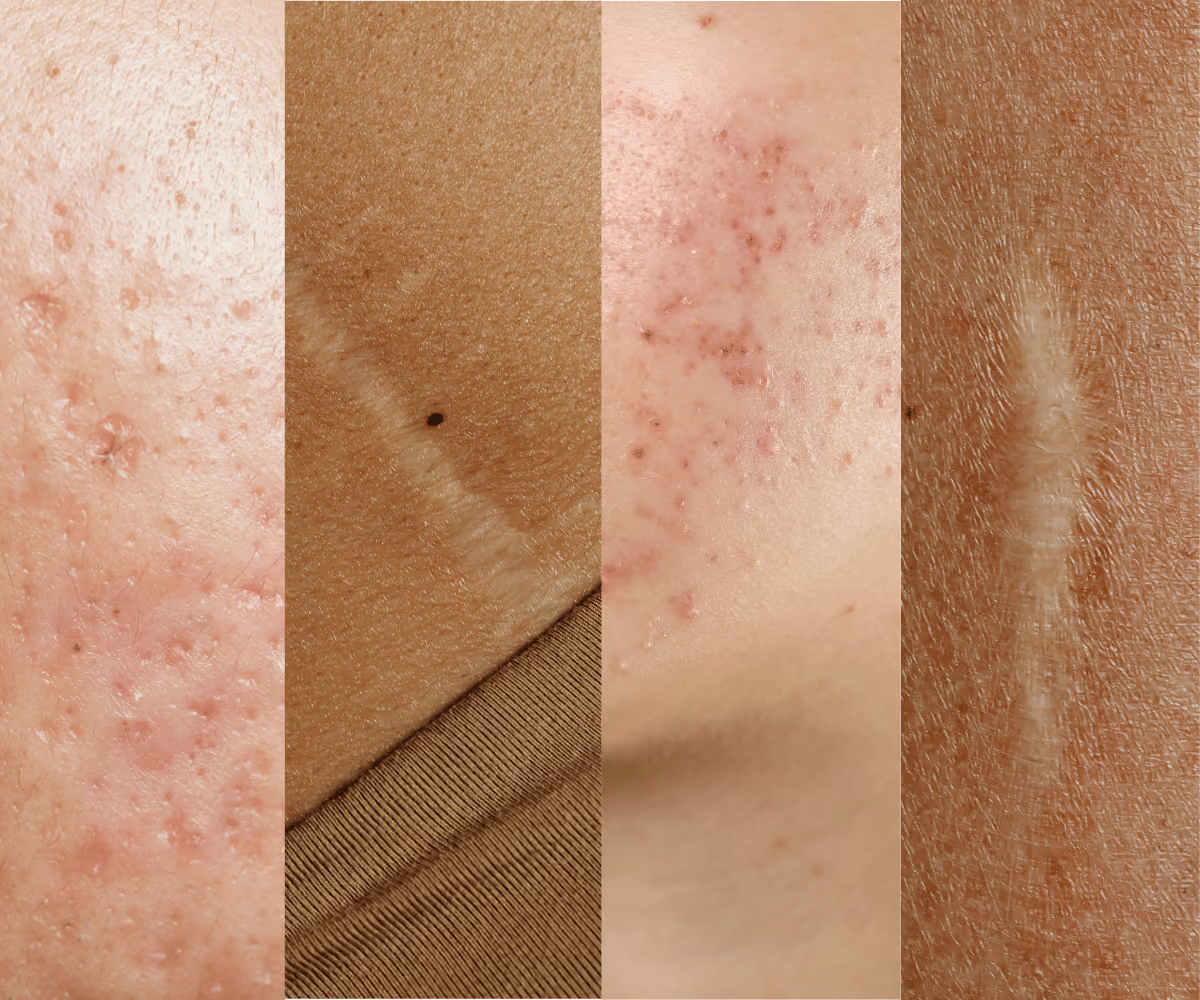
SCAR TYPES Acne scars, C-section scars, injury scars, burn & surgical scars, scars from cuts
TREATMENT OPTIONS CO2 laser, radiofrequency needling, TCA CROSS, cortisone injection, subcision
Scar Treatment

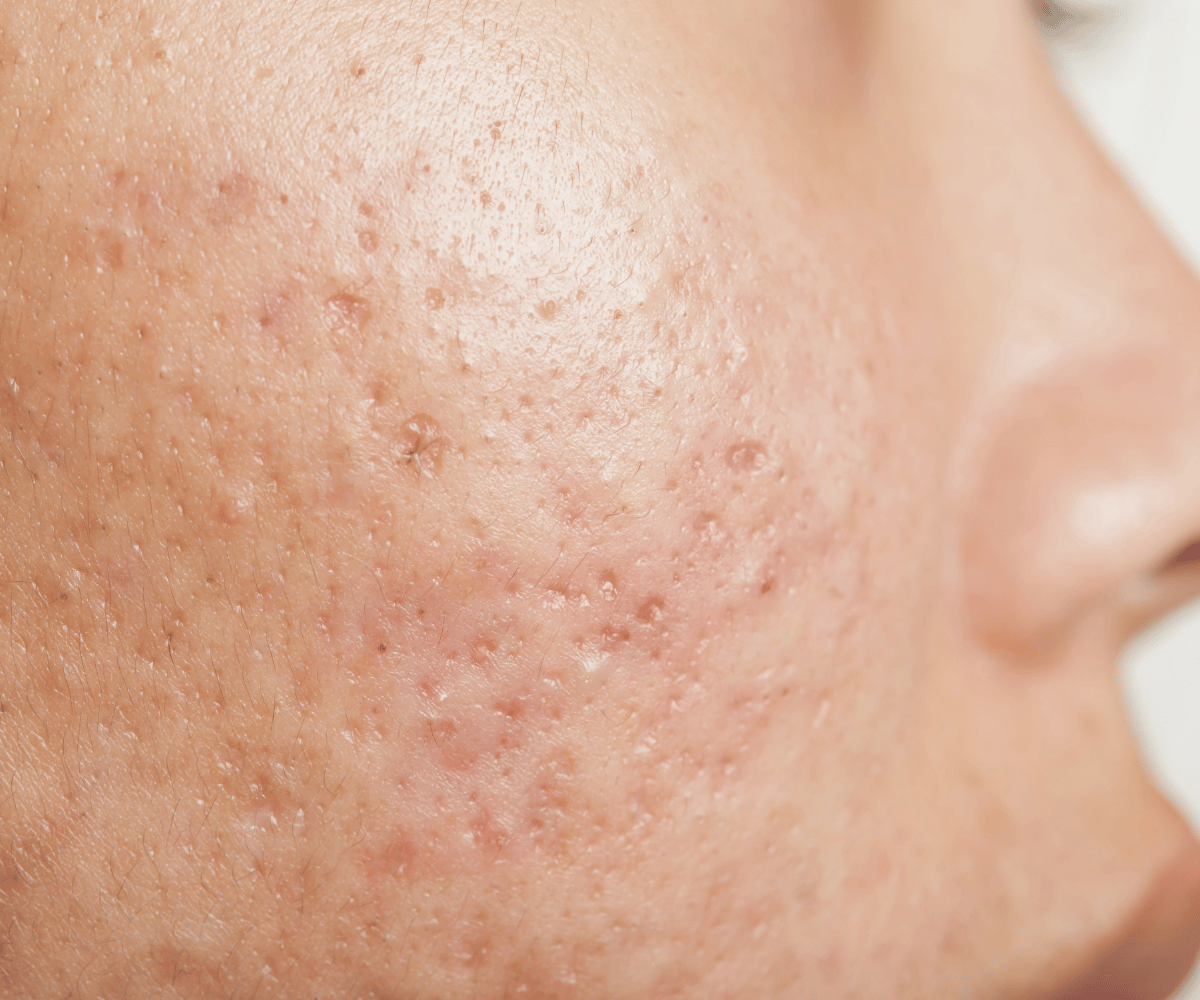
ACNE SCARS

Acne scars can remain visible for years as indentations, uneven texture or redness. With a targeted acne scar treatment, your complexion can be improved depending on the scar type.

What types of acne scars are there?

Acne scars develop when inflammation damages the skin's collagen structure. The main types are ice pick scars, boxcar scars and rolling scars – mixed forms are also common. Typical signs are sunken scars, uneven skin texture and redness or dark marks after acne.

Our treatment approaches for acne scars:

  1. TCA CROSS: Targeted spot treatment for deep ice pick scars that also stimulates collagen production
  2. CO2 laser: Especially suitable for boxcar scars and for improving skin texture and collagen production
  3. Subcision: Releases tethered tissue in rolling scars and can lift sunken scars
  4. Radiofrequency needling (RFN): Stimulates collagen production in mixed acne scars and improves skin texture
  5. PRP needling: Combines microneedling with your own blood plasma and supports the regeneration of sunken acne scars
Scar Treatment

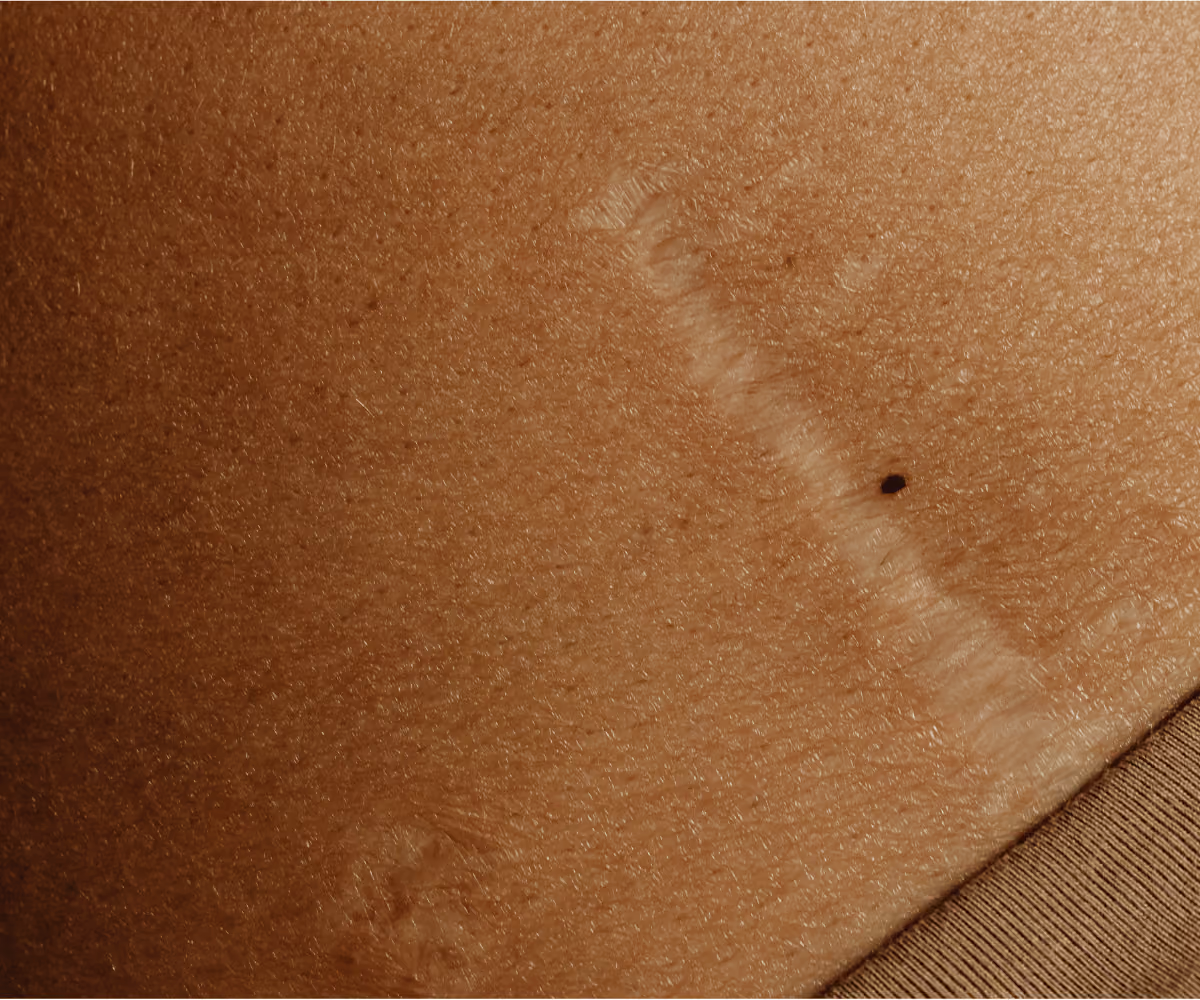
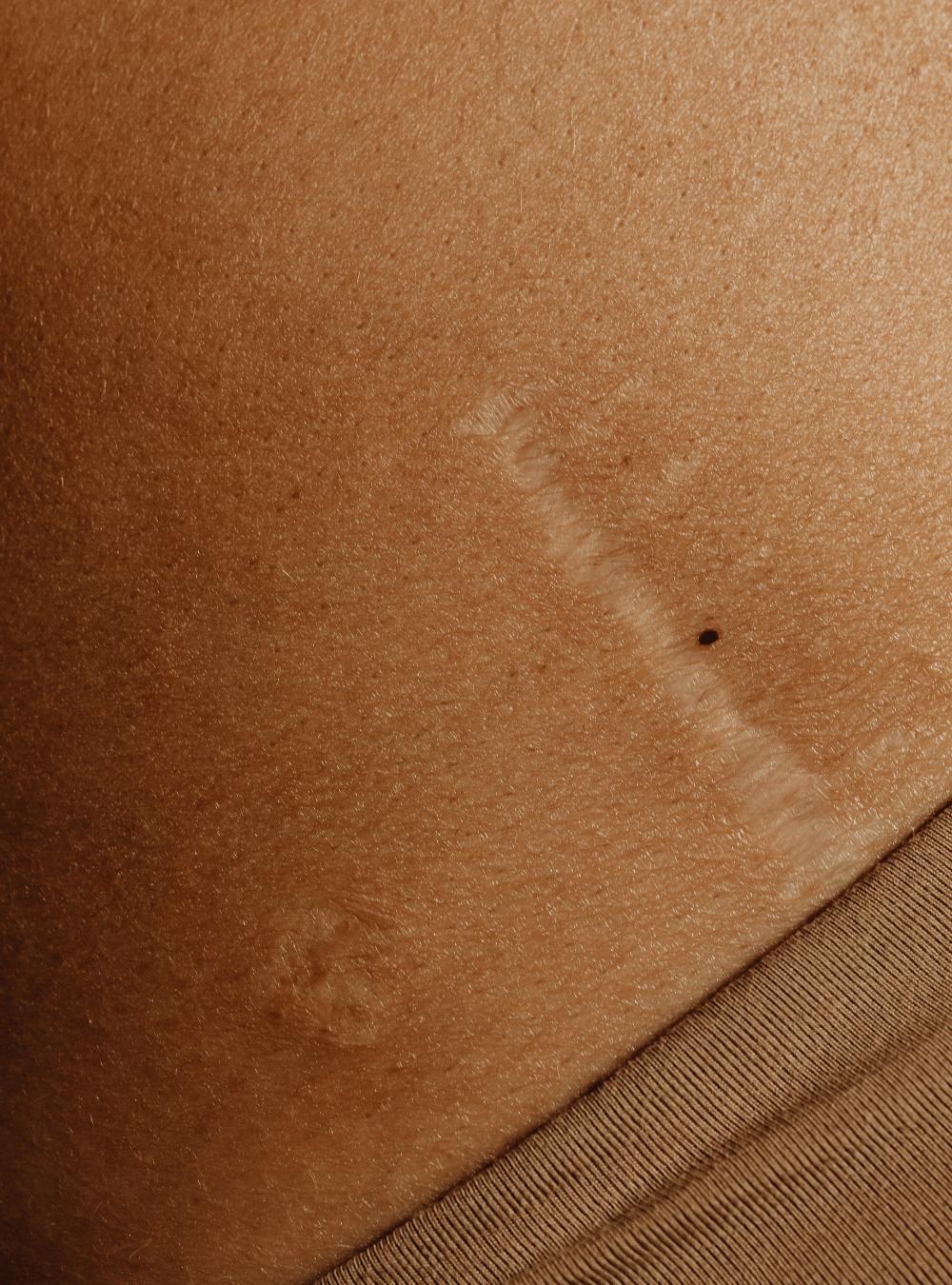
C-SECTION SCARS

A C-section scar can remain visible or noticeable even after it has healed, for example through a pulling sensation, hardening, redness or an indented scar. A targeted C-section scar treatment can improve the scar's texture and appearance.

What makes a C-section scar special?

After a C-section, the scar can adhere to deeper tissue, harden or sink in. Redness and pigment changes are also possible. If these changes persist after the healing phase, a scar treatment after a C-section can be worthwhile.

Common concerns

  • Pulling or hardening in the scar area
  • Raised, red or discolored scars
  • Indented areas or overhanging skin
  • The wish for a less noticeable scar

Our treatment approaches for C-section scars

  1. Subcision: Releases adhesions and can lift sunken scars
  2. Collagen booster: Supports volume restoration and collagen production
  3. Radiofrequency needling (RFN): Improves the scar's structure and texture
  4. Cortisone injection: Suitable for raised and thickened scars
  5. CO2 laser: Refines skin texture and the scar surface
SCAR TREATMENT

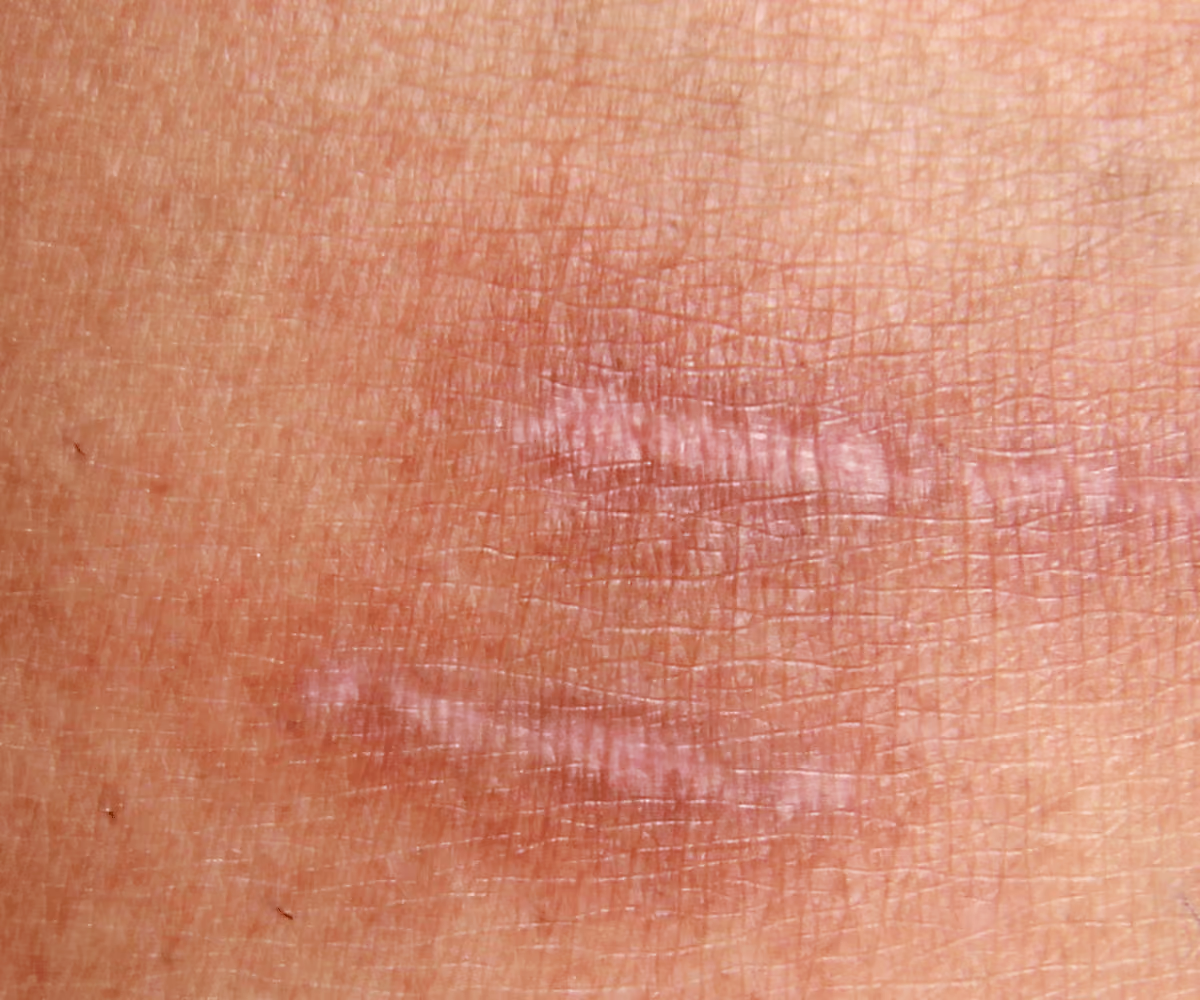
INJURY SCARS

Injury scars from an accident, a fall or a cut can heal in very different ways. Depending on the depth and the wound-healing process, scars may be flat, sunken, tethered or raised. Redness and discoloration are also possible.

What our patients often tell us

  • Raised or bulging areas along the scar
  • Sunken or uneven areas
  • Persistent redness or discoloration
  • A pulling or tethered feeling, especially with deeper wounds or scars over joints

Our treatment approaches for injury scars:

  1. Vascular laser / IPL: Reduces redness in scars with many blood vessels
  2. Radiofrequency needling (RFN): Stimulates collagen and improves skin texture
  3. CO2 laser: Smooths uneven or raised scars
  4. Cortisone injection: Suitable for raised and bulging scars
  5. Subcision: Releases adhesions and can lift sunken scars – combined with a collagen or skin booster if needed
  6. PRP: Supports regeneration and collagen production

‍

SCAR TREATMENT

BURN AND SURGICAL SCARS

Burns or surgery can leave raised, sunken or tethered scars. If the scar tissue contracts strongly and restricts movement, it is called a contracture scar.

What our patients often tell us

  • A larger scarred area that visibly changes the appearance of the skin
  • A feeling of tension or pulling, especially over joints or during movement
  • Raised, hardened or uneven areas
  • With deeper surgical scars: a feeling that the scar is attached to the tissue underneath

Our treatment approaches for burn and surgical scars:

  1. Cortisone injection: Suitable for raised and hardened scars
  2. CO2 laser & radiofrequency needling (RFN): Improve skin texture and unevenness
  3. Subcision: Releases adhesions and can lift sunken scars – combined with a collagen or PN skin booster if needed
  4. Vascular laser / IPL: Reduces redness, especially in newer scars

‍

SCAR TREATMENT

SELF-HARM SCARS

Many people carry scars from a time in their life that is long behind them, and still wish these scars were less noticeable in everyday life. At Kalia Lab, the focus is on your skin – not on the story behind the scar.

What matters with older scars

Whether light, dark, flat, raised or wide: which scar treatment makes sense depends mainly on the scar's age, structure and your skin's condition. The goal can be to visibly reduce the scar, improve its texture or even out its color.

What you can rely on

  • Discreet, confidential consultation
  • No unnecessary questions
  • An individual treatment plan
  • A realistic assessment of possible results

Our treatment approaches for self-harm scars:

  1. CO2 laser: Smooths uneven scars and improves the skin's surface
  2. Radiofrequency needling (RFN): Stimulates collagen production and improves structure and texture
  3. Collagen booster: Can gently lift sunken scars
  4. Cortisone injection: Can flatten raised and thickened scars
Our Doctors

READY FOR THE
NEXT STEP?

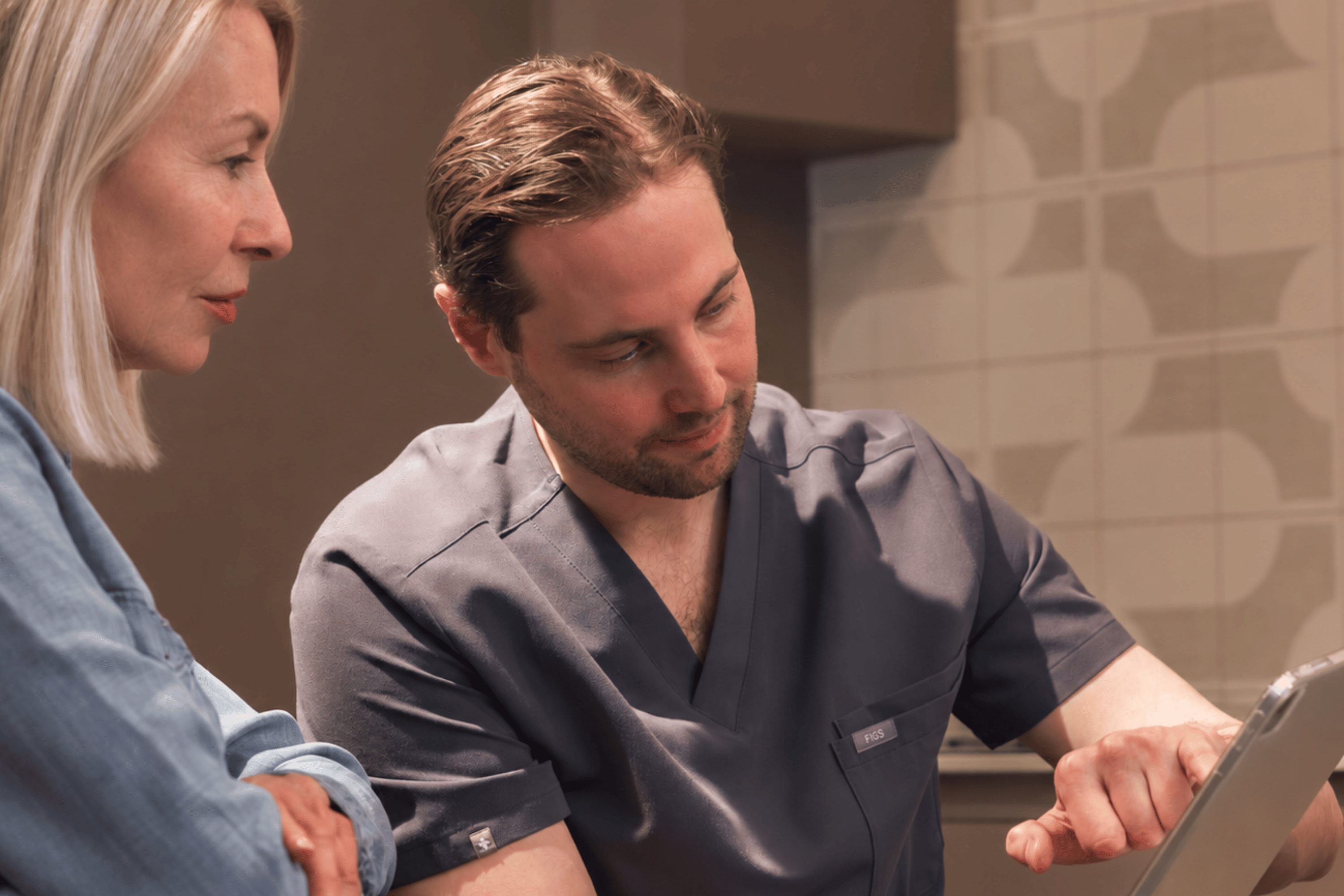
Every scar is unique, and your treatment should be just as individual. In a personal consultation, our doctors analyze your scar in detail and develop a treatment plan with you that is tailored precisely to your skin – so you can feel completely comfortable in your skin again.

Book scar consultation
Our Doctors

READY FOR THE
NEXT STEP?

Every scar is unique, and your treatment should be just as individual. In a personal consultation, our doctors analyze your scar in detail and develop a treatment plan with you that is tailored precisely to your skin – so you can feel completely comfortable in your skin again.

Book scar consultation
Your way to a younger AND MORE BEAUTIFUL self

OUR CLINICS

F.A.Q.

Which treatment is best suited for my scar?

Every scar is unique and requires the optimal treatment. To address individual needs, a thorough consultation and understanding of your skin are essential.  As skin experts, we take responsibility in offering you the best treatment and taking both your needs and your skin’s needs into account.

When is a scar "mature" – and why does it matter?

A scar is considered mature after about 12 months. Fresh, immature scars often respond particularly well to gentler procedures such as vascular laser or pressure/silicone therapy. Mature scars are best treated with more intensive procedures such as subcision, collagen boosters or CO2 laser resurfacing. During your consultation, we assess how mature your scar is and choose the right procedure.

I have several scars with different characteristics – how do you handle that?

That's actually the norm: many scars show a combination of characteristics, for example raised, red and darker pigmented. We then proceed step by step. First we address acute inflammation and redness, then contour and volume, and finally pigmentation, usually with at least 4 weeks between the individual procedures.

Are the treatments painful?

Most procedures are made comfortable with local anesthesia or a numbing cream. We discuss the exact procedure and what to expect with you in detail beforehand.

Can scars be treated all year round?

That depends on the treatment and on where the scar is located. With certain treatments, sun exposure should be avoided, which is why we don't recommend them during the summer months. However, if the scar is covered by clothing, it can also be treated in summer.

Which treatment is suitable for deep scars?

For deep scars, the following are suitable:
Fractional CO2 laser resurfacing: A very effective method for improving the appearance of deep scars. The laser stimulates collagen production and smooths the skin.
Microneedling (often combined with PRP): Tiny micro-injuries created by fine needles stimulate collagen production, leading to a long-term improvement of the skin's surface.
Dermal fillers such as collagen boosters: For very deep scars, fillers such as hyaluronic acid can even out the skin level and create a smoother surface.
Subcision: The fibrous strands beneath the skin are released to lift sunken scars and stimulate the formation of new connective tissue.

Which treatment is suitable for raised scars or keloids?

For raised scars or keloids, the following are suitable:
Cortisone injections: One of the most effective methods for reducing raised scars. Cortisone reduces inflammation and inhibits the scar tissue so the scar becomes flatter.
Silicone sheets and silicone gel: These products help smooth raised scars and can be used over the long term.
Laser therapy (e.g. pulsed dye laser): The laser can reduce redness and help soften the scar tissue.
Cryotherapy: For smaller raised scars, freezing the scar can shrink and soften the tissue.

Which treatments do you offer to reduce scars?

We offer a wide range of treatments. Options include minimally invasive treatments such as radiofrequency needling and PRP, medication-based therapies (e.g. cortisone), laser and light therapies (CO2 laser or IPL), cryotherapy, polynucleotides and muscle relaxants. We also offer cosmetic treatments such as microdermabrasion or microneedling. We'll find the ideal treatment for your individual needs.

Can scars be smoothed out completely?

This depends on various factors such as the depth of the scar, the type of scar and how recent it is. It also depends on your skin's individual ability to regenerate. With our treatments, scars can be visibly reduced and their appearance improved.

What types of scars are there?

Scars are mainly classified by their texture: flat, skin-colored scars that are barely noticeable; sunken scars (atrophic); wider, flat scars (dehiscent); raised, firm scars (hypertrophic); and scars that grow beyond the original wound and are often red, itchy or painful (keloids). In practice, a single scar often shows several of these characteristics at once, which is why we start every treatment with a thorough analysis.

Who will treat me?

At Kalia Lab, you are treated exclusively by qualified doctors and Medical Skin Experts who regularly attend further training and have completed training at the Kalia Academy.

Related Treatments

MORE SOLUTIONS FOR SKIN REJUVENATION

Radiofrequency Needling

Optimize your look with radiofrequency needling: a natural treatment for skin tightening and reducing wrinkles and scars, giving you a youthful appearance

More about this

CO2 laser

CO2-Laser: smooths fine lines naturally, effectively improves skin texture, and provides an even skin tone – for long-lasting and natural results

More about this

PRP

Radiant complexion with PRP: the PRP treatment revitalizes dull skin and improves skin structure and elasticity.

More about this
Glow Club

STAY UPDATED
ON GLOWY NEWS

Get a 10% discount on your first booking — sign up for our newsletter now and receive regular information about our latest treatments, promotions and much more so you don't miss anything!

GET IN TOUCH

ANY QUESTIONS?
WE ARE HERE FOR YOU

Simply fill out the contact form.
Our team will get back to you personally as soon as possible.

ONLINE SKIN ANALYSIS

Do you know your true skin age?

Get to know your skin needs better and find out what your skin really needs!

Start a free skin analysis