Upper Arm Tightening – A Comparison of Methods, Tips, and Treatments
For many, toned upper arms are an aesthetic goal as well as a symbol of vitality and self-confidence. However, depending on lifestyle, genetics, weight fluctuations, or simply the natural aging process, the skin in this area often tends to lose its firmness.
Today, we show you that there are effective ways to specifically target sagging upper arms—ranging from effective exercises and gentle treatments to targeted aesthetic procedures. We provide expert insight into which methods are suitable for whom, the non-surgical clinical options available, when surgery might be an appropriate choice, and how professional guidance can help you find your ideal solution.
Why do the upper arms go slack in the first place?
Sooner or later, many people struggle with a loss of firmness in their upper arms. This becomes particularly noticeable when the skin on the back of the arm appears soft and slack. But what causes this? The reasons are varied and often involve a combination of natural processes and external factors, such as sun exposure without adequate UV protection.
Natural skin aging
As we age, the production of collagen and elastin—two proteins that keep our skin firm and elastic—declines. At the same time, the connective tissue weakens. The result: the skin can no longer snap back as effectively and begins to sag.
Weight fluctuations
Significant weight gain or loss places extreme strain on the skin. Excess skin often remains on the upper arms, particularly after weight loss. The more rapid the weight loss, the less likely the tissue is to retract.
Lack of physical activity and muscle loss
The triceps—the muscle at the back of the upper arm—quickly loses volume when not exercised. The skin loses its firmness, and the tissue appears softer. Without targeted strengthening, the area takes on a flabbier appearance.
Genetic Predisposition & Hormones
Some people are naturally prone to weak connective tissue or an unfavorable distribution of fat on their upper arms. Hormonal changes, such as menopause, can further exacerbate this effect.
.avif)
Arm Toning – Your Options
From simple home remedies and targeted workouts to clinical procedures, there are many ways to tone your upper arms. The key is finding the method that suits you, your lifestyle, and your goals.
1. Training & Muscle Building
Targeted strength training can strengthen the muscles at the back of the arm—specifically the triceps—and add volume beneath the skin. Exercises such as triceps dips, push-ups, or dumbbell workouts help tone the area over the long term and improve muscle tone.
2. Skincare & Firming Products
Special body lotions containing ingredients like caffeine, retinol, or hyaluronic acid promise firmer skin. Regular exfoliation and massages can also boost circulation and improve the skin's appearance. However, the effects tend to be superficial and limited.
3. Healthy Lifestyle
Adequate sleep, a balanced diet, and staying hydrated form the foundation of any skincare routine. Protection against UV rays is particularly important, as sun exposure accelerates the aging of connective tissue and contributes to sagging skin.
When natural measures reach their limits
Despite disciplined training and proper care, excess skin folds or pronounced fat deposits may persist—especially after significant weight loss or with advancing age. In such cases, it is worth considering medical procedures designed to firm and tighten specific areas.
Upper arm tightening without surgery – Gentle clinical methods
Not everyone wants to opt for a surgical procedure right away. Fortunately, modern aesthetic medicine offers a range of non-invasive treatments that can visibly firm up your upper arms—without a scalpel, yet with noticeable results:
Radiofrequency and ultrasound
Radiofrequency or focused ultrasound treatments stimulate collagen production in the deeper layers of the skin, gradually making the skin firmer. Methods such as Morpheus8 or Ultherapy are particularly effective, as they deliver energy directly into the tissue without damaging it.
ADVANTAGES OVER SURGERY: No incisions, no scars, and no downtime. The treatment is performed on an outpatient basis and involves minimal discomfort, delivering results that appear gradually yet look natural.
Cryolipolysis (“fat removal via cold”)
This procedure involves the targeted freezing of fatty tissue, which is subsequently broken down by the body. It is particularly suitable for cases where small pockets of fat interfere with skin tightening. The method causes minimal discomfort and requires little to no downtime.
ADVANTAGES OVER SURGERY: Non-invasive, requiring no anesthesia or surgical risks. The procedure involves minimal pain and risk, requires no recovery time, and fits easily into daily life.
EMS (Electromagnetic Muscle Stimulation)
Specialized devices and procedures, such as EMSculptNEO, allow for targeted muscle building and simultaneous fat reduction. The upper arms appear firmer as the muscles are strengthened and skin texture is improved. Ideal for those seeking faster body contouring results.
ADVANTAGES OVER SURGERY: Targets and strengthens muscles without surgical intervention. There is no scarring, no recovery period, and no disruption to daily activities.
Injection lipolysis (“fat-dissolving injection”)
A specialized active ingredient is injected into small fat deposits, which the body then breaks down. This method can refine the contours of the upper arms but does not replace skin tightening procedures for cases of significant tissue laxity.
ADVANTAGES OVER SURGERY: No general anesthesia, no incisions, and no scarring. Low risk and quick procedure. Particularly suitable for small areas.
For whom are non-invasive methods suitable?
Gentle procedures are particularly suitable for mild to moderate skin laxity, younger skin, or as a complement to a healthy lifestyle. They are ideal if you want visible improvement with absolutely no downtime or surgical risks.
Surgical Upper Arm Lift – When Nothing Else Helps
During a surgical upper arm lift (brachioplasty), excess skin and fat are removed from the upper arm area. The procedure aims to tighten sagging skin and permanently improve the contour of the upper arm. The incision is typically made on the inner side of the arm and may extend to the armpit.
Healing Process & Aftercare
Following the procedure, you will typically wear a compression sleeve on your arm for a few weeks to stabilize the shape and reduce swelling. The recovery period generally lasts between 4 and 6 weeks, including phases of rest and reduced activity. Regular follow-up appointments are important to monitor healing and detect any complications at an early stage.
Risks & Potential Side Effects
As with any surgical procedure, there are risks involved: infection, unsightly scarring, postoperative bleeding, or uneven skin texture are possible. Additionally, mild sensory disturbances or a sensation of tightness may occur during the first six months.
Results
Surgical upper arm lifting generally yields very distinct, long-lasting results, particularly in cases of significant skin laxity that cannot be improved through exercise or skincare alone.
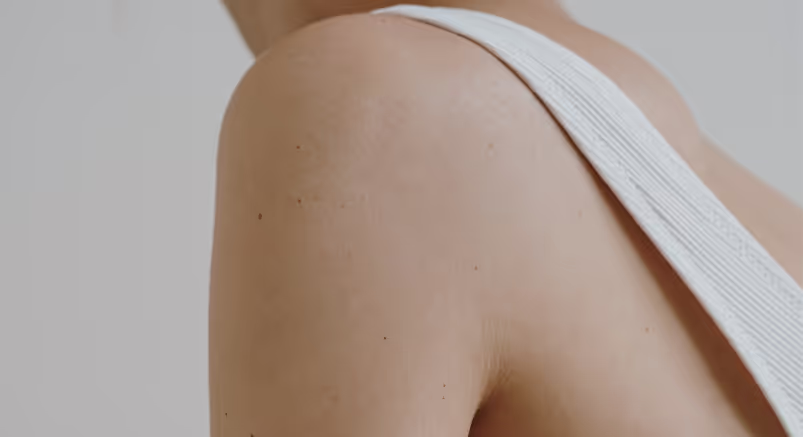
Tightening Upper Arms: How to Find the Right Method for You
Do you want to make a change to your arms but aren't sure yet what’s right for you? No problem. Choosing the right treatment depends on several factors: How significant is the skin laxity? How important is a natural-looking result to you? And how much time are you willing to invest in recovery and aftercare?
It all starts with an honest self-assessment. When you look at your arms in the mirror, are you bothered by a slight loss of definition, or is there significant sagging that makes your clothes fit poorly? For mild to moderate concerns, exercise, skincare routines, or minimally invasive treatments—such as radiofrequency or muscle stimulation—can yield excellent results. These methods are gentle, fit easily into your daily life, and carry minimal risk.
However, if you are looking for a more dramatic change, a surgical lift might be the next step. This is particularly appropriate when there is a large amount of excess skin, for instance, following significant weight loss.
Importantly, you don’t have to make this decision in the dark. A consultation with experienced specialists will clarify which method makes sense and is feasible for you personally. Above all, what matters most is that you feel comfortable with your decision. Kalia Lab supports you every step of the way. Book a no-obligation consultation today.
Frequently Asked Questions About Arm Lifts
What is the difference between surgical and non-surgical tightening?
Surgical upper arm tightening (brachioplasty) yields permanent results but involves incisions, scarring, and a recovery period. Non-invasive methods—such as radiofrequency, ultrasound, or electromagnetic muscle stimulation (EMS)—tighten the skin through targeted heat or pulse effects or promote muscle building. Advantages include no scalpel, no scarring, and usually little to no downtime; however, the results are often less effective in cases of significant skin laxity.
How many sessions are required for non-invasive methods?
Typically, 3–6 sessions spaced 1 to 4 weeks apart are advisable, depending on the skin condition and the method used. The effects build up gradually, and in some cases, become visible only after several weeks.
Can I resume sports and daily activities immediately after the treatment?
Yes; with non-surgical methods, there is usually no downtime required. Light physical activity on the day of treatment is fine. However, following a surgical tightening procedure, you must adhere to instructions regarding rest and compression garments—such as avoiding heavy lifting or strenuous exercise for about 2–4 weeks.
Are there any risks or side effects?
With minimally invasive treatments, redness, mild swelling, and—rarely—slight pain or temporary numbness may occur. With surgical tightening, in addition to scarring and swelling, there is a small risk of wound healing complications or infections. A detailed consultation with medical specialists is essential in any case.
When are non-surgical methods appropriate, and when is surgery the right choice?
Non-surgical methods are the better choice for mild to moderate skin laxity and if you desire gradual improvement without scarring. If there is significant excess skin, a surgical arm lift is the more promising option; surgery typically yields the most impressive results in such cases.
The bottom line: You can firm up your upper arms – using the right method for you.
There are many ways to make your arms look firmer and more defined again, whether through targeted exercise, effective skincare, or modern aesthetic treatments.
The key is to choose the method that suits your body, your expectations, and your lifestyle. Non-invasive treatments like radiofrequency or EMS offer a gentle, convenient option for reducing early signs of sagging—without surgery and with minimal effort. In cases of significant excess skin, a surgical arm lift delivers lasting, visible results. At Kalia Lab, we guide you through this process with medical expertise, extensive experience, and a keen eye for natural aesthetics.
Get a personalized consultation and discover how to feel completely comfortable in your body again. Book your personal consultation at Kalia Lab today and begin your transformation toward firmer arms and renewed self-confidence.
.png)